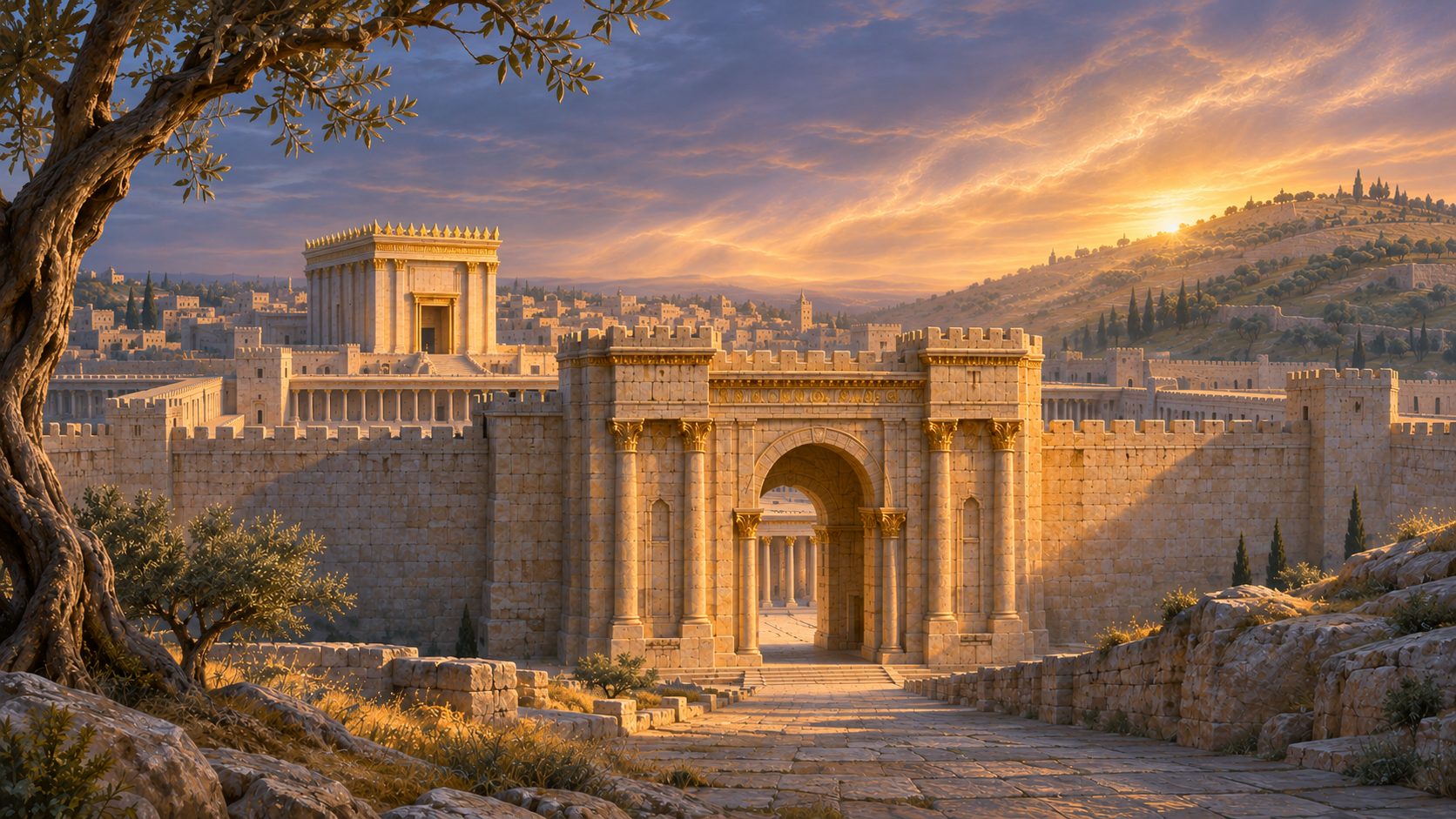
1. The Departure to the East
Ezekiel 8–11 describes the sequential departure of the glory of the LORD from the Jerusalem temple. The movement is marked by specific locations and a clear eastward trajectory. The glory moves first from the cherub within the temple to the threshold of the house (Ezekiel 9:3; 10:4). From the threshold, the glory moves to stand over the cherubims, which then lift their wings and relocate to the "door of the east gate of the LORD's house" (Ezekiel 10:18–19). Finally, the glory departs from the midst of the city and stands "upon the mountain which is on the east side of the city" (Ezekiel 11:23).
Direct Statement: The text explicitly states that the glory of the LORD departs Jerusalem by moving progressively eastward, concluding its movement on the mountain east of the city (traditionally identified as the Mount of Olives) before the destruction of Jerusalem.
2. Eastward Imagery in the Genesis Narratives
The eastward movement in Ezekiel resonates with earlier canonical patterns of exile, though these connections vary in their directness. In Genesis, eastward movement frequently corresponds to separation or displacement. After the expulsion from Eden, God placed cherubims "at the east of the garden of Eden" (Genesis 3:24) to guard the way of the tree of life. Later, Cain goes out from the presence of the LORD and dwells in the land of Nod, "on the east of Eden" (Genesis 4:16). When Lot separates from Abram, he journeys east toward Sodom (Genesis 13:11).
Typology and Thematic Echo: The cherubims stationed at the east of Eden provide a possible typological correspondence to the temple sanctuary and the cherubim of Ezekiel's vision. Cain’s eastward departure is explicitly linked to his going out from the LORD’s presence. Lot also travels east, but Genesis frames his movement as a separation from Abram, not explicitly from God. The recurring eastward movement in Genesis supports a thematic pattern, but assigning specific significance to that pattern—such as viewing it as a direct precedent for Judah's Babylonian exile—is an interpretation rather than an explicit textual claim.
3. The Anticipated Return and the Closed Gate
In Ezekiel's vision of a restored temple, distinct from the historical Second Temple described in Ezra, the return of the divine glory mirrors its departure. The prophet is brought to the gate "that looketh toward the east" (Ezekiel 43:1). He observes the glory of the God of Israel coming "from the way of the east," and the glory enters the house "by the way of the gate whose prospect is toward the east" (Ezekiel 43:2, 4).
Following this entry, the east gate assumes a unique status. In Ezekiel 44:1–2, the prophet is brought back to the outer eastern gate, which is now shut. The text states: "This gate shall be shut, it shall not be opened, and no man shall enter in by it; because the LORD, the God of Israel, hath entered in by it, therefore it shall be shut." The only exception involves "the prince," who is permitted to sit in it to eat bread before the LORD, entering and exiting by the porch of that gate (Ezekiel 44:3).
Study Observation: The text connects the gate's closure with the LORD's entry. This may mark the gate's sacred status within the restored temple. The prince is granted unique access, but the New Testament does not directly cite Ezekiel 44 to identify Jesus as the prince or to correlate the closed gate with his incarnational entry.
4. The Second Temple and the Unnarrated Glory
Three settings should be distinguished. Ezekiel 8–11 depicts the glory withdrawing from Jerusalem's temple before its destruction. Ezekiel 40–48 presents a vision of a restored temple, where the glory returns from the east (Ezekiel 43:1–5) and God promises to dwell among Israel (Ezekiel 43:7). Ezra 3 describes the rebuilding of the altar and temple foundation, met with both weeping and rejoicing (Ezra 3:12), while Ezra 6 describes the completion and dedication of the historical Second Temple (Ezra 6:16–17). Ezra does not narrate the glory's return or state whether Ezekiel's vision was fulfilled.
Study Observation: Ezra’s dedication account differs from the dedications of the tabernacle and Solomon’s temple, which explicitly describe the LORD’s glory filling the sanctuary (Exodus 40:34–35; 1 Kings 8:10–11).
5. The Final Approach in the New Testament
Jesus approaches Jerusalem from the Mount of Olives (Luke 19:37), moving toward the city from the east. This reverses the direction of the glory’s departure in Ezekiel 11:22–23 and may invite a canonical comparison, though the Gospel does not explicitly identify the approach with Ezekiel’s vision. Upon entering the city, he goes into the temple and exercises authority over its precincts (Matthew 21:12–13).
Ultimately, the Gospels depict the tearing of the temple veil "in twain from the top to the bottom" at the moment of his death (Matthew 27:51). The New Testament presents Jesus himself as the embodiment of God's presence (John 1:14; Colossians 2:9).
Possible Echo: The descent from the Mount of Olives toward the city serves as a possible echo of Ezekiel's returning glory. While the New Testament authors do not cite Ezekiel's eastern gate directly in these accounts, they present a narrative where God's presence returns to his people in Christ.
Study Observation on John 10: In John 10:7, Jesus declares, "I am the door of the sheep." While this imagery shares the theme of access, it operates within an agricultural and pastoral metaphor rather than the architectural framework of Ezekiel's temple. The images share an access theme but arise in distinctly different contexts.
| Textual Event | Canonical Location | Connection to Ezekiel's Vision | Certainty Level |
|---|---|---|---|
| Cherubims at the East | Genesis 3 | Eden's guarded access parallels later sanctuary imagery | Possible Typology |
| Eastward Movements | Genesis 4, 13 | Movement east as separation or displacement | Thematic Parallel |
| Second Temple Dedication | Ezra 3, 6 | Ezra does not narrate the glory’s return | Study Observation |
| Descent from Mount of Olives | Luke 19 | Approaching the city from the eastern mountain | Possible Echo |
Conclusion
The biblical texts present a pattern of presence, departure, and anticipated return. Ezekiel describes the glory departing toward the mountain east of the city and later returning from the east in his temple vision. Genesis contains eastward movement associated in different ways with separation and displacement. Ezra’s accounts do not narrate a return of the glory, while the New Testament presents Jesus as the embodiment of God’s presence. Read together, these passages invite a canonical comparison, though the Gospels do not explicitly identify Jesus’ approach to Jerusalem with Ezekiel’s vision.
For a broader examination of divine identity and canonical patterns of presence, see the foundational study No Other Beside Me: The Disclosure of the Single Subject.