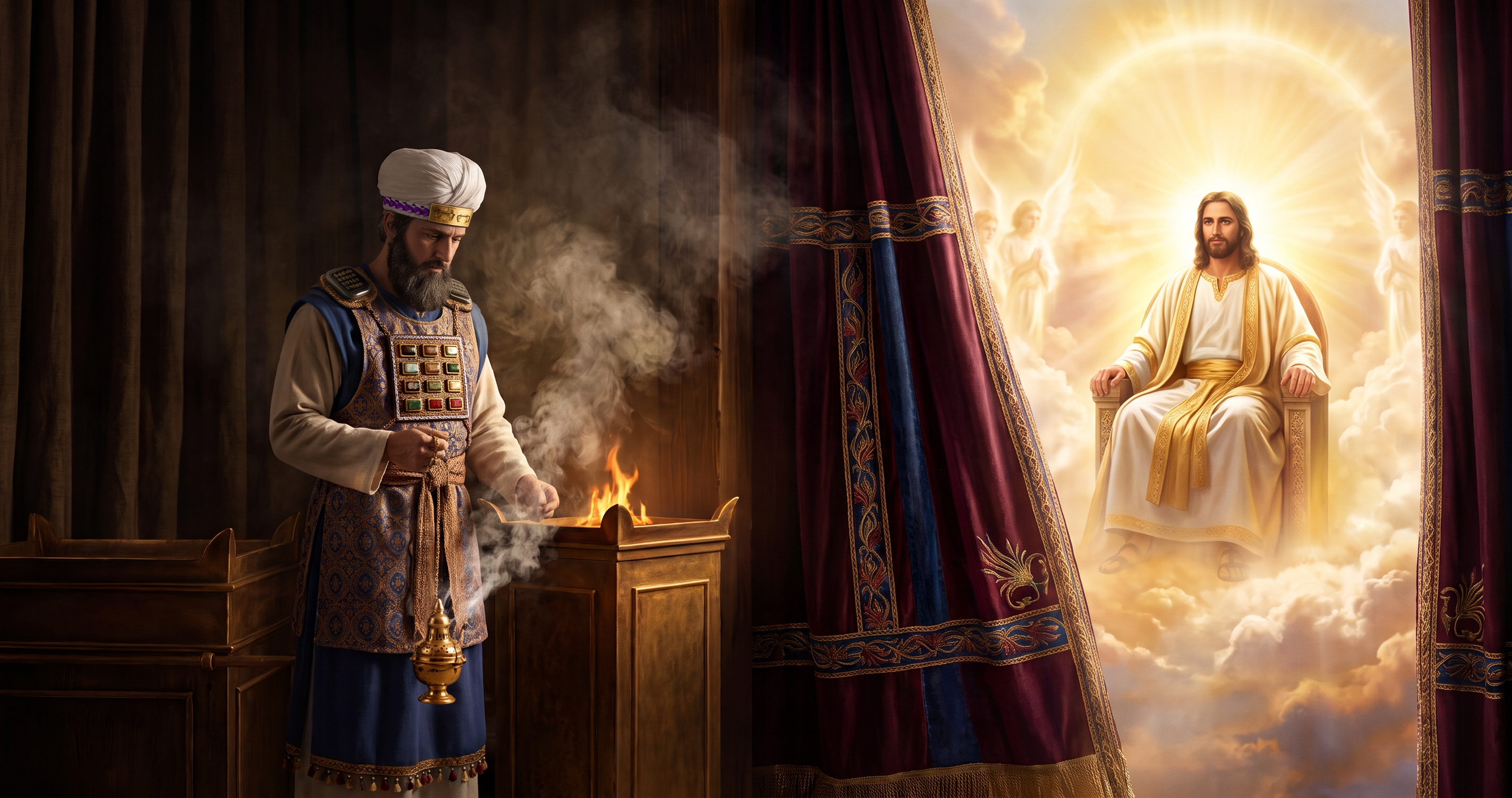
The Finality of Christ’s Offering
“But this man, after he had offered one sacrifice for sins for ever, sat down on the right hand of God.”
Does the New Testament teach that Christ’s one offering is sacramentally offered through an ongoing earthly priesthood? To test this from Scripture alone, the Catholic understanding must be stated fairly. It does not teach that Christ is slain repeatedly on earthly altars, that Calvary was insufficient, or that the Eucharist adds a second, independent sacrifice to the cross.
Rather, official Catholic doctrine defines the rite as making present Christ's one, unrepeatable sacrifice: the victim is identical, the offering is presented through the ministry of an earthly priesthood, and “only the manner of offering is different” (unbloody rather than bloody) (Catechism of the Catholic Church, §§ 1366–1367; cf. Council of Trent, Session 22, Chapter 2).
The question is not whether the New Testament forbids repeating the physical slaying of Christ, but whether its testimony concerning his priesthood, heavenly session, and covenant meals leaves room for an ongoing ministerial offering of that same sacrifice.
1. The Abiding Priest and the Completed Offering
Hebrews 7:23–28
Hebrews opens its comparison of the two covenants by setting mortal succession against an enduring person:
“And they truly were many priests, because they were not suffered to continue by reason of death: But this man, because he continueth ever, hath an unchangeable priesthood.”
The Levitical line multiplied officeholders because every priest died. Christ's priesthood, by contrast, does not pass from him to another, because he lives forever.
The passage directly identifies what this living Priest presently does:
“Wherefore he is able also to save them to the uttermost that come unto God by him, seeing he ever liveth to make intercession for them.”
His priesthood is neither dormant nor terminated; he lives, saves, and intercedes. Yet when the text turns to his sacrificial work, it directly opposes daily priestly action to a finished event:
“Who needeth not daily, as those high priests, to offer up sacrifice, first for his own sins, and then for the people's: for this he did once, when he offered up himself.”
The text assigns perpetuity to the Priest's life and intercessory work, while presenting his self-offering as a completed historical act. It leaves no suggestion that an enduring priesthood requires an ongoing sacrificial offering, or that Christ's perpetual ministry operates through an earthly order offering him under another manner.
2. The Heavenly Sanctuary and the Single Appearing
Hebrews 9:24–28
In chapter 9, Hebrews locates where the High Priest now ministers:
“For Christ is not entered into the holy places made with hands, which are the figures of the true; but into heaven itself, now to appear in the presence of God for us.”
The passage places Christ’s entrance and appearance before God in heaven, rather than in an earthly, handmade holy place. It immediately links repeated self-offering with repeated suffering:
“Nor yet that he should offer himself often, as the high priest entereth into the holy place every year with blood of others; For then must he often have suffered since the foundation of the world: but now once in the end of the world hath he appeared to put away sin by the sacrifice of himself.”
The inspired author ties frequent offering to frequent suffering. Because Catholic theology explicitly denies repeated suffering in the Mass, this verse alone does not settle the issue. Rather, Hebrews links frequent self-offering with frequent suffering and declares Christ's offering once; whether a sacramental presentation constitutes a further offering is the question that must be weighed against the epistle's broader argument and its conclusion in Hebrews 10:18.
Verses 27 and 28 frame his redemptive work within a fixed sequence:
“And as it is appointed unto men once to die, but after this the judgment: So Christ was once offered to bear the sins of many; and unto them that look for him shall he appear the second time without sin unto salvation.”
The text directly states that Christ appears now in heaven for us, that his sacrifice occurred once to put away sin, and that his next appearing will be his second coming for salvation. It describes no intermediate earthly altar where his offering is presented again.
3. The Seated Son and the Cessation of Offerings for Sin
Hebrews 10:11–18
In Hebrews 10, the contrast between the two covenants is concentrated into the posture of their priests:
“And every priest standeth daily ministering and offering oftentimes the same sacrifices, which can never take away sins: But this man, after he had offered one sacrifice for sins for ever, sat down on the right hand of God; From henceforth expecting till his enemies be made his footstool. For by one offering he hath perfected for ever them that are sanctified.”
The text directly contrasts the standing posture of the Levitical priests, whose daily offerings could never take away sins, with Christ, who offered a single sacrifice, perfected his people forever, and sat down at God's right hand awaiting his enemies' subjection.
The Holy Ghost confirms the finality of this work through Jeremiah's new covenant promise:
“And their sins and iniquities will I remember no more. Now where remission of these is, there is no more offering for sin.”
Hebrews does not directly name or explicitly refute later doctrines of the Mass or sacramental re-presentation; it never addresses that specific theological vocabulary. Yet Hebrews’ repeated emphasis on the finality of Christ’s offering presses hard against that claim. If an earthly priesthood continues to present an offering for sin—even under an unbloody sacramental mode—the liturgical action that Hebrews places on the unfinished side of the contrast has been reintroduced after the Son has sat down. The text does not merely bar multiple deaths; it declares the complete cessation of any further “offering for sin.”
4. Covenant Meals and the Table of the Lord
1 Corinthians 10 and 11
How, then, does the New Testament understand the sacrificial language of the Lord's Supper? The answer must be weighed alongside the Old Testament covenant meals to which the Apostle Paul appeals.
Throughout the Old Testament, covenant sacrifice and sacred eating are closely linked:
-
Mount Sinai: Moses sprinkled the blood of the covenant upon the altar and the people, after which the elders went up and “saw God, and did eat and drink” (Exod 24:8–11).
-
The Peace Offering: The blood was sprinkled and the fat burned upon the altar as an offering made by fire unto the Lord; subsequently, the priest and the worshiper ate the remaining flesh in holy fellowship (Lev 7:11–21).
-
The Place of the Name: Israel was commanded to bring burnt offerings and sacrifices to the place chosen by the Lord, and there eat before God and rejoice (Deut 12:5–18).
-
The Passover: The lamb was slain and its blood struck upon the doorposts, after which the household feasted upon the roasted sacrifice (Exod 12).
In 1 Corinthians 5:7–8, Paul applies this Passover imagery: “For even Christ our passover is sacrificed for us: Therefore let us keep the feast, not with old leaven, neither with the leaven of malice and wickedness; but with the unleavened bread of sincerity and truth.” Paul's immediate subject here is purging moral corruption from the assembly, rather than an explicit instruction on the Lord's Supper; yet he anchors that call in the foundational reality that the sacrifice of the Paschal Lamb is already accomplished.
Paul develops this sacrificial context further in 1 Corinthians 10:
“The cup of blessing which we bless, is it not the communion of the blood of Christ? The bread which we break, is it not the communion of the body of Christ?... Behold Israel after the flesh: are not they which eat of the sacrifices partakers of the altar?”
— 1 Corinthians 10:16, 18
Paul affirms that the cup and bread are a true communion in the blood and body of Christ. To illustrate this, he points to Israel: those who ate the sacrifices were “partakers of the altar.” In Israel’s sacrificial economy, the worshiper who ate the flesh was not offering the sacrifice upon the altar; he was sharing in the covenant fellowship and benefits established by the sacrifice already offered. By analogy, partaking of the bread and the cup brings believers into genuine communion with the body and blood of the Lord, just as eating food sacrificed to idols involves communion with devils (vv. 20–21).
When Paul turns to the institution of the Supper in 1 Corinthians 11:17–34, his pastoral focus is immediately occasioned by congregational division. The Corinthians had corrupted the gathering through social factions and self-indulgence, eating their own suppers while humiliating the poor who had nothing (vv. 20–22). To correct this abuse, Paul does not reduce the meal to mere social ethics; he anchors his rebuke in the sacred reality of what the bread and cup convey:
“This do in remembrance of me... For as often as ye eat this bread, and drink this cup, ye do shew the Lord's death till he come.”
Because the rite is a genuine participation in the Lord's covenant death, unworthiness in receiving it incurs severe spiritual reckoning: he that eateth and drinketh unworthily “eateth and drinketh damnation to himself, not discerning the Lord's body” (vv. 27–29).
Paul grounds both communal unity and the solemn threat of judgment directly in the reality of the bread and cup and the proclamation of Christ's death. At the same time, he identifies the liturgical actions of the meal as remembrance and proclamation. These terms do not explicitly rule out all sacrificial associations, nor does Paul explicitly describe the meal as a feast upon a completed sacrifice. But neither do these passages describe the meal as an earthly priestly presentation of Christ’s offering to God; Hebrews supplies the categories by which that claim must be tested.
5. The Verdict of the Heavenly Session
This brings us back to the question posed at the outset. Catholic theology seeks to preserve the uniqueness of the cross by defining the Mass not as a new sacrifice, but as the sacramental re-presentation of the one sacrifice, presented by an earthly priest in an unbloody manner.
Yet when that formulation is brought before the bar of the New Testament, it encounters the sustained contrast running through Hebrews. The epistle does not merely deny that Christ suffers repeatedly; it declares that where remission is, “there is no more offering for sin.” It refuses to locate any ongoing propitiatory action on earth, pointing believers instead to “heaven itself,” where the living Priest appears before God for us.
The priests of old stood and offered repeatedly, bound to a liturgy that could never cease. The Son remains priest forever; having offered once for all, he sat down.
What does Christ’s priesthood reveal about his relationship to the God who appointed and exalted him? No Other Beside Me follows Israel’s Scriptures into the heart of this question.